Course I · The larder

What the Barents Sea Gives

A provenance-led tour of the ingredients that define luxury Arctic dining — what they are, where they come from and how the finest kitchens treat them.

Flat illustration of a fishing boat on the Barents Sea under a pale winter moon
The lead essay

Why Cold Makes Sweet

Every northern chef will tell you the same thing in different words: the water does the cooking long before the kitchen does. In the Barents Sea and along the coast of Finnmark and Nordland, low temperatures slow metabolism and growth. Animals take longer to reach size, and in that extra time their muscle develops a tighter grain. Many cold-water species also store energy in ways that read on the palate as clean, sweet and gently rich rather than oily.

Provenance matters, too, because the coast is not one place. Skrei is defined by a journey from the Barents Sea to spawning grounds off Lofoten; king crab by the deep, sheltered fjords of Varanger; char by the clear, oxygen-rich lakes of Lapland. Ask where your plate began, and a good server will answer with a fjord, a boat or a village, not simply a country.
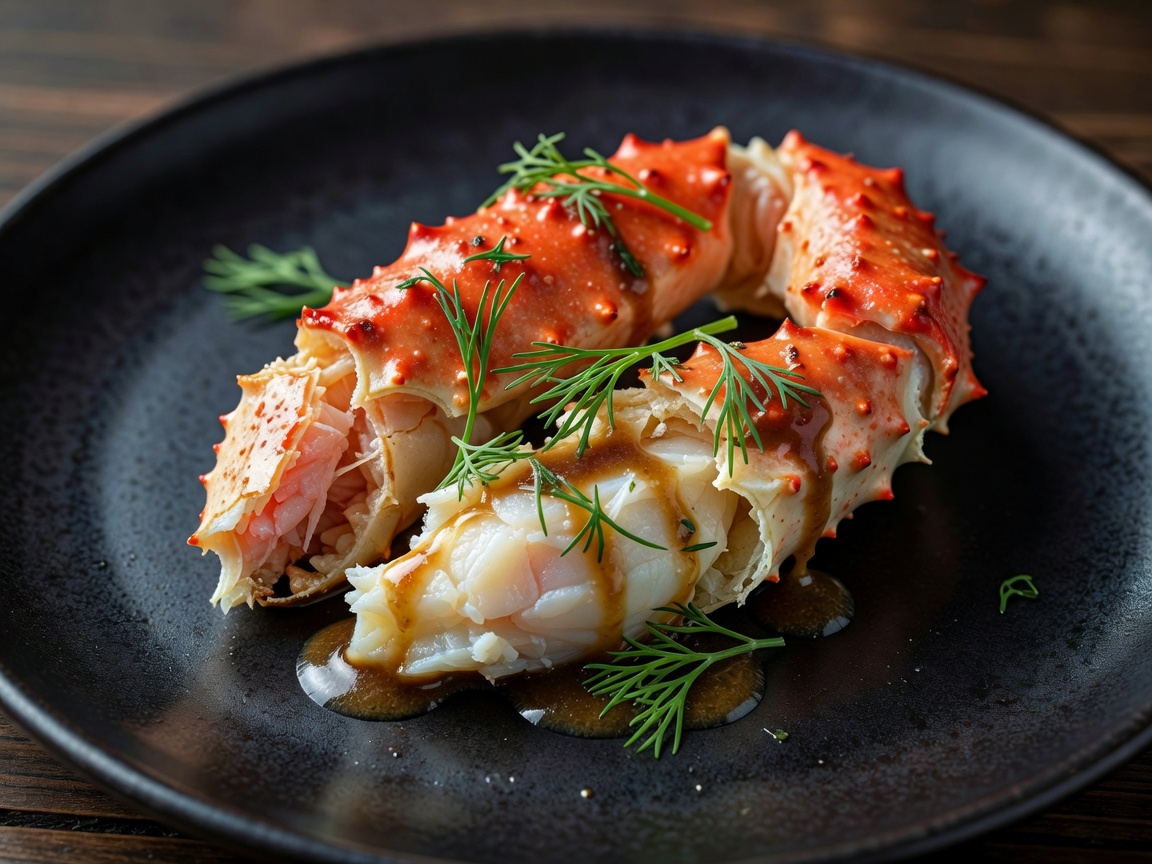
Red king crab leg served on a dark stoneware plate with brown butter and dill
I · Shellfish

Red King Crab of Varanger

The red king crab (Paralithodes camtschaticus) is a newcomer to European waters. Soviet scientists introduced it to the Murmansk area in the 1960s, and it spread west into Norwegian waters from the late 1970s. Today the fjords of eastern Finnmark — Varangerfjord, Bøkfjord near Kirkenes — produce some of the most prized crab in the world.

A single leg can be longer than a forearm. The finest restaurants steam or poach it briefly, then serve the meat with butter, lemon and sea salt; some offer it raw, sliced thin. Year-round availability is possible, but many chefs prefer autumn and winter, when shells are full after the summer moult.

II · Fish

Lofoten Skrei

Skrei is the Northeast Arctic cod at its peak: mature fish that leave the Barents Sea each winter and swim hundreds of kilometres to spawn along the Norwegian coast, most famously off Lofoten. The name comes from the Old Norse for "to wander". The migration builds firm, white, lean flesh.

The classic preparation is mølje — poached cod served with its liver and roe. Finer kitchens add brown butter, shellfish sauces or pickled root vegetables. Do not overlook cod tongues, the tender muscle traditionally cut by Lofoten's children to earn pocket money. Lofoten's dried cod, tørrfisk, holds EU Protected Geographical Indication status.

III · Freshwater

Arctic Char

Salvelinus alpinus is the northernmost freshwater fish on earth, thriving in the cold lakes of Finnish Lapland, northern Norway and Svalbard. Wild char from lakes around Inari is a seasonal rarity; carefully farmed char from Iceland and the Nordic north supplies most restaurants.

Its flesh ranges from pale peach to deep coral. Kitchens cure it lightly with salt and sugar, cold-smoke it over juniper or alder, or sear it skin-side down and serve it with sorrel, lingonberry or a beurre blanc sharpened with birch sap.

IV · Shellfish

Green Sea Urchin

The green sea urchin (Strongylocentrotus droebachiensis) lives on rocky northern seabeds. Divers hand-pick it in the cold months, when the five lobes of roe are fullest before spring spawning. The flavour is sweet, briny and creamy.

The best rooms serve it raw, opened to order, perhaps with a drop of cold-pressed rapeseed oil or a spoonful of crème fraîche. Because it is hand-harvested in small quantities, it remains one of the most luxurious bites on any northern menu.

V · The wider pantry

From the Wider Larder

Greenland halibut from Disko Bay, cold-water prawns (Pandalus borealis), snow crab, Atlantic halibut, scallops and sea kelp complete the coastal pantry. Inland, Lake Inari gives vendace and whitefish.

VI · Garnish

What Grows Beside the Sea

Cloudberries in late summer, lingonberries and crowberries in autumn, sea buckthorn, angelica and spruce tips. Reindeer and fermented fish sauces add a land-and-sea depth unique to the north.

The Larder at a Glance

Typical peak months; exact timing varies with weather, quota and region.
IngredientMain originBest monthsClassic treatment
Red king crabVaranger, FinnmarkSeptember – MarchBriefly steamed, butter, sea salt
Skrei codLofoten, VesterålenJanuary – AprilMølje, brown butter, roe
Arctic charLapland lakes, IcelandYear-round; wild in summerCured, juniper-smoked, seared
Green sea urchinNorthern NorwayNovember – MarchRaw from the shell
Greenland halibutDisko Bay, GreenlandYear-roundSmoked or butter-poached
VendaceLake Inari, FinlandSummer and autumnPan-fried in rye flour